
Ophthalmology is a surgical subspecialty within medicine that deals with the diagnosis and treatment of eye disorders and it deals both primary and specialty eye care that encompasses many different subspecialties, including: strabismus/pediatric ophthalmology, glaucoma, neuro-ophthalmology, retina/uveitis, anterior segment/cornea, oculoplastic/orbit, and ocular Glaucoma Retina Neuro-Ophthalmology Ocular Oncology
It is essential to know the molecules of life in order to understand the disease development mechanism and the role of blood metabolites having diagnostic value. The human eye is a biochemical factory whose activity depends on biochemical transformations of a single molecule, retinal. This molecule is indispensable for the function of the visual pigments, namely rhodopsin in rods”
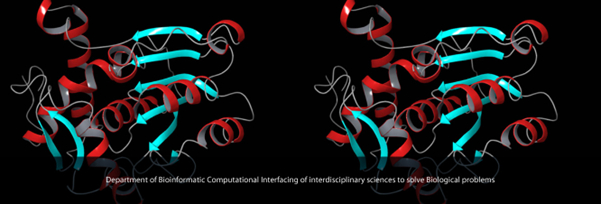
Contributions of different approaches of bioinformatics related to ophthalmology has given birth to a new branch of occuloinformatics. Hence, occuloinformatics can be coined as a new approach of research and diagnostics in relation to ocular disorders.
CoreLab involves in Experimental planning, sample processing and data analysis and to perform testing on different sample types such as, serum, plasma, urine, spinal fluid, and other body fluid samples. The high throughput analyzers for chemistry, immunochemistry, and hematology allows for an uninterrupted daily testing service to our patient description and production enhancement services and products.
Genetic testing can be a useful medical tool in ophthalmology to help confirm or rule out a suspected inherited ocular disorder, provide important information of inheritance patterns and risk of recurrences for families, and help guide clinical management, appropriate referral and surveillance decisions. By virtue of its rapidly changing advances, genetics and genomics serves a large role within ophthalmology, and subspecialists with the same level of detailed and broad knowledge as any other ophthalmology subspecialty are now required in order to meet the growing needs of the expanding population
Ocular microbiology plays a vital role in ophthamology. The advancements in molecular biology and also the newer technologies pave approach for higher understanding of ocular diseases. Advances within the field of infectious diseases are rapid.
Nanotechnology will revolutionize our approach to current therapeutic challenges like drug delivery, and postoperative scarring and will enable us to address currently unsolvable problems like sight-restoring therapy for patients with retinal degenerative disease and treatment of ocular diseases to toxicity issues.
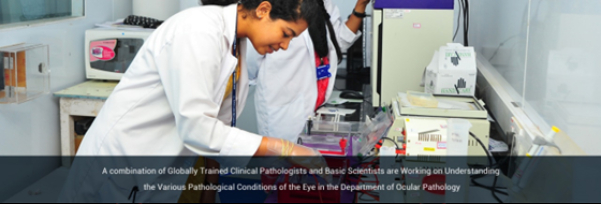
Ophthalmic Pathology is the sub-specialty of Pathology and Ophthalmology that focuses on diseases of the eye and its neighbouring tissues. Ophthalmic pathologists study tissues excised by Ophthalmologists to provide a precise diagnosis of the disease.
The key sites currently targeted for stem cell transplantation include the cornea, the clear tissue covering the front of the eye that helps focus incoming light, the neural retina, which contains the photoreceptor cells that transduce light into neural electrical signals sent to the visual cortex, and the retinal
Vision Care & Research Centre